A partner calls with what sounds like a promising opportunity. They have an end customer, a use case, a likely budget, and a route into the account. The channel manager agrees to help and moves on to the next conversation.
Two weeks later, the deal registration in Salesforce still says almost nothing.
The account name is vague. The expected value is a guess. Another partner may already be working the same opportunity. The customer has changed the buying date, but the close date has not moved. Nobody can tell whether the partner needs technical support, pricing approval, or a direct sales introduction.
This is not simply a partner portal problem. It is a conversation capture problem.
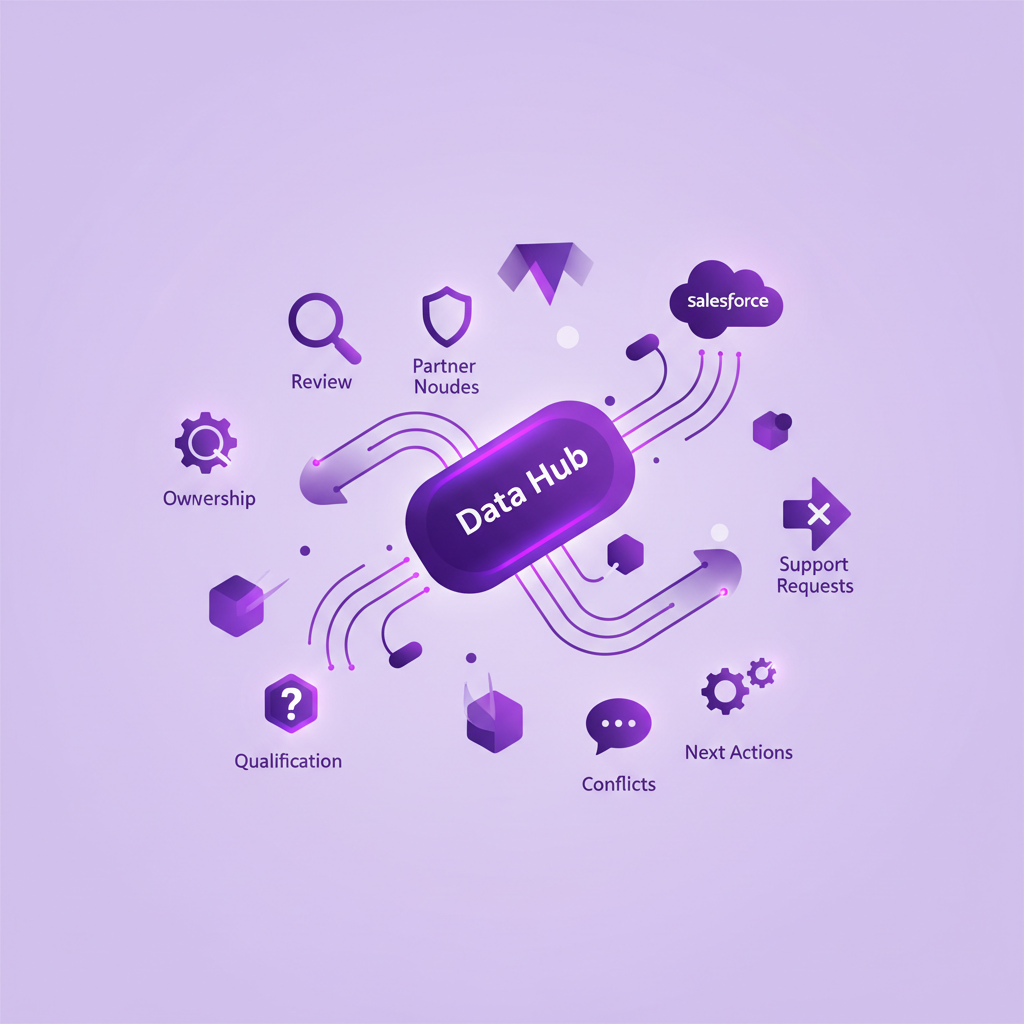
For channel teams, important deal evidence often arrives during ordinary mobile calls between a partner manager and a reseller, distributor, referral partner, or implementation partner. If that call never becomes usable Salesforce context, the registration record can look complete while the real deal remains hidden in one person's memory.
What is partner deal registration in Salesforce?
Partner deal registration is the process through which a partner submits a potential customer opportunity to a vendor for review. The vendor can then approve, reject, or request more information according to its channel rules.
In Salesforce, organisations may manage this process through Partner Relationship Management, Experience Cloud, Lead records, Opportunity records, custom objects, approval workflows, or a combination of these. The exact design varies, but the commercial purpose is usually consistent.
Deal registration helps a business:
- See partner sourced pipeline earlier
- Reduce conflict between partners and direct sales teams
- Protect an approved partner's position for a defined period
- Apply consistent qualification and approval rules
- Track partner activity, conversion, and channel revenue
The registration is the structured claim. The conversation is often the evidence behind it.
Why partner calls create a Salesforce visibility gap
Partner selling is collaborative and informal. A channel manager may receive a direct call while travelling, between meetings, or immediately after the partner has spoken to the end customer. That speed is useful. It is also where context disappears.
A portal form can capture required fields, but it cannot preserve every nuance that emerges in a live conversation. A short note such as "customer interested, needs pricing" leaves several unanswered questions.
Who is the end customer? Has the partner spoken to a decision maker or only identified an account? Is there already an active Opportunity? Is the stated budget confirmed? What must happen before the registration can be approved? What did the partner actually commit to do next?
If the answers stay outside Salesforce, channel operations must make decisions from partial information. That can produce slow approvals, duplicate pipeline, poor forecasts, and avoidable disputes over deal ownership.
What should a channel sales call capture?
A useful partner call record should do more than prove that two people spoke. It should give the next reviewer enough context to understand what changed and what needs attention.
1. Partner and caller identity
Start with the basics: which partner organisation called, who represented it, and which internal channel manager took the call.
Identity matters because one partner account may have several contacts with different roles. A sales representative, alliance lead, technical consultant, and finance contact should not be treated as interchangeable.
Where matching is uncertain, the record should remain available for review rather than being attached confidently to the wrong partner or customer.
2. End customer identity
The call should preserve the clearest available description of the end customer. That may include the legal entity, trading name, location, business unit, website, or relevant Salesforce Account.
This is essential for duplicate checks and conflict review. Similar account names, corporate groups, franchises, and regional divisions can make a simple name match unreliable.
3. Opportunity source and partner role
The channel team needs to know how the partner became involved.
Did the partner originate the opportunity? Did the vendor supply the Lead? Is the partner influencing an existing direct deal? Will the partner resell, refer, implement, or provide specialist services?
These are different commercial relationships. A captured conversation can provide evidence for the correct classification, but the approved Salesforce value should follow the organisation's programme rules.
4. Customer need and use case
Record the problem the customer is trying to solve in the customer's own terms where possible. Avoid reducing the conversation to a generic product interest label.
A specific need helps reviewers judge whether the opportunity is real, which team should support it, and whether the proposed solution is credible. It also helps later sellers avoid making the customer repeat the same discovery.
5. Qualification confidence
Separate what is confirmed from what is assumed.
A partner may say the customer has budget, but that could mean the customer has an approved project, has discussed a range, or simply expects to request funding. Those statements should not carry the same weight.
A good call summary should make uncertainty visible. AI can help identify possible budget, authority, need, and timing signals, but a person should confirm material qualification fields before they affect approval or forecast decisions.
6. Deal value and commercial shape
Capture the proposed value, products, services, quantity, term, margin request, and any commercial dependencies discussed during the call.
The goal is not to turn every conversation into a final quote. It is to show what the current estimate includes and why it may change.
For example, a partner may quote licence value without implementation services, or include a wider rollout that the customer has not yet approved. Those distinctions matter when the vendor compares pipeline and plans resources.
7. Buying stage and target date
The registration should reflect the customer's actual buying process, not merely the date the partner hopes to close.
Useful call evidence may include a planned discovery session, technical evaluation, procurement review, board approval, renewal date, or contract deadline. It may also reveal that the project is exploratory and should not yet be treated as committed pipeline.
Dates need context. A target date without the event that drives it is difficult to assess and easy to leave stale.
8. Potential conflict or duplication
Partner calls sometimes reveal that another reseller, a direct seller, or an existing account team is already involved.
That information should trigger a review, not an automatic accusation or rejection. The same end customer may have separate business units, projects, locations, or buying groups. Conversely, two differently named registrations may describe the same commercial opportunity.
Preserve the source conversation, run the appropriate duplicate checks, and route uncertain cases to the owner defined by the channel policy.
9. Support requested from the vendor
Many registrations become stale because the partner and vendor are waiting on each other.
The call should identify exactly what the partner needs. Common requests include technical validation, a demo, pricing guidance, security documents, executive sponsorship, marketing funds, product availability, or an introduction to the direct account team.
Each request should have an owner and a due date where appropriate.
10. Agreed next action
Every meaningful partner call should end with a clear next step.
The partner may need to submit missing registration details. The channel manager may need to confirm account ownership. A solutions consultant may need to join a customer session. An approval may need to wait for evidence.
The next action should name the owner, the expected outcome, and the review date. "Follow up soon" is not an operational plan.
A practical Salesforce workflow for partner calls
The best workflow depends on the Salesforce design and partner programme, but the following sequence provides a useful starting point.
Step 1: Capture the mobile conversation
The partner manager makes or receives the call through the normal business mobile experience. Where company policy, consent requirements, and local law permit, the organisation captures the call and makes the resulting activity available to Salesforce.
Step 2: Match the partner contact
Use the phone number and available CRM context to identify the partner contact and partner Account. If several records could match, send the activity for review rather than selecting one silently.
Step 3: Identify the end customer context
Connect the conversation to the relevant end customer Account, Lead, registration, or Opportunity where the relationship is clear. Keep partner identity and end customer identity separate so reporting does not confuse the two.
Step 4: Preserve the source evidence
Store the call activity and, where configured, the recording, transcript, and summary under the organisation's access and retention policy. The summary should make the core facts easy to scan while the source remains available to authorised reviewers.
Step 5: Compare the conversation with the registration
Check whether the call changes the customer identity, partner role, value, products, stage, target date, or requested support. Highlight differences for review.
Do not let an AI generated interpretation overwrite approved commercial fields without appropriate controls.
Step 6: Run conflict and duplicate checks
Review existing Leads, Accounts, Opportunities, and registrations according to the organisation's channel rules. Consider corporate relationships and separate projects before concluding that two records are duplicates.
Step 7: Route the approval or exception
If the registration meets the required criteria, move it into the defined approval process. If evidence is missing or a conflict exists, assign the exception to the correct channel operations, sales, or legal owner.
Step 8: Create accountable follow up
Turn agreed actions into owned Salesforce Tasks, notifications, or workflow steps. The action should point back to the relevant registration or Opportunity so the reason for the work is visible.
Step 9: Revisit the registration after later calls
Deal registration is not a one time data entry event. Later partner calls may change the buying date, scope, customer contact, competitive position, or delivery model. The Salesforce record should be reviewed when the evidence changes.
What AI can support and what people should decide
AI can make partner call review faster. It can produce a summary, identify named organisations, extract possible dates and values, suggest actions, and flag language that may indicate conflict or uncertainty.
It should not be treated as the final authority on commercial ownership.
People should remain accountable for:
- Approving or rejecting a registration
- Deciding whether two opportunities are genuinely the same
- Resolving conflict between a partner and a direct sales team
- Confirming forecast values and dates
- Applying programme terms, exclusivity, and margin rules
- Determining what call content may be recorded, retained, or shared
The safe pattern is simple. Capture the source, use AI to organise it, and require human confirmation for material decisions.
Metrics that show whether the workflow is improving
Call volume alone will not show whether partner operations are healthier. Better measures connect conversation capture to a commercial or operational result.
Consider tracking:
- Time from partner conversation to registration submission
- Time from submission to approval or a request for more information
- Percentage of registrations with a clear end customer match
- Percentage of registrations with an owned next action
- Duplicate or conflict rate
- Age of registrations with no recent partner activity
- Changes to value or target date after partner calls
- Conversion from approved registration to Opportunity and Closed Won
- Partner response against agreed service levels
These measures can expose process gaps without turning conversation capture into surveillance. The purpose is to improve data quality, partner support, and decision speed.
Questions to answer before rollout
Channel leaders, Salesforce administrators, and compliance teams should agree on several points before automating the workflow.
- Which mobile calls are in scope?
- How are partner contacts matched to partner Accounts?
- How is the end customer represented separately?
- Which Salesforce object stores the registration?
- Which fields may AI suggest, and which require confirmation?
- Who can access recordings, transcripts, and summaries?
- What happens when the match is uncertain?
- Who owns duplicate and channel conflict review?
- Which programme rules govern approval and expiry?
- How long should conversation evidence be retained?
The answers should reflect the organisation's Salesforce architecture, partner agreements, recording policy, and legal obligations.
Better partner pipeline starts with better evidence
A deal registration form creates structure. It does not create the conversation that proves the deal is real.
For mobile channel teams, the decisive context may arrive in a normal phone call: the end customer has approved a pilot, another reseller has appeared, procurement has moved the date, or the partner needs technical support before the opportunity can progress.
RocketCell helps Salesforce teams capture ordinary business mobile calls and turn them into usable CRM context, including call activity, recordings where configured, transcripts, summaries, and suggested next actions. The partner programme still defines the rules, and people still make the commercial decisions. What changes is that those decisions can begin with a more complete record of what was actually said.